.png)
HOW DOES MUSIC AS A DIGITAL SERVICE AFFECT CONSUMER ATTITUDE AND BEHAVIOUR?
Article Sidebar
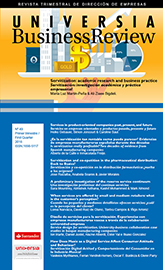
Main Article Content
Abstract
Digital technologies allow users to share files, which in some circumstances violates property rights and constitutes consumer misbehaviour. This form of behaviour, often called piracy, is cited as causing revenue loss to the creative industries. Existing empirical evidence is silent on consumer’s individual beliefs and their attitudes towards copyright infringement. A new concept dubbed the ‘Robin Hood’ tendency is developed as a quantitative measure of consumer belief that illegally copying and distributing digital resource is a legitimate form of behaviour. Analytical applications are developed which exploit a unique dataset comprising 18,000 data points for music consumers from ten countries. Results show that digital markets suffer from consumers who demonstrate the Robin Hood tendency and identifies that countries with strong institutions have fewer consumers with this attitude. Furthermore, evidence suggests that copyright law enforcement should be coupled with efforts to educate consumers as to the effect their misbehaviour has content creators.
Article Details
Section
How to Cite
References
Bustinza, O.F., Vendrell-Herrero, F., Parry, G., & Myrthianos, V. (2013a). “Piracy and music business models”. Industrial Management and Data Systems, 113 (1), 4–22. (DOI: 10.1108/02635571311289638)
Bustinza, O.F., Parry, G.C., & Vendrell-Herrero, F. (2013b). "Supply and demand chain management: The effect of adding services to product offerings". Supply Chain Management: An International Journal, 18 (6), 618–629. (DOI: 10.1108/SCM-05-2013-0149)
Bustinza, O.F., Parry, G., Vendrell-Herrero, F., & Myrthianos, V. (2015). “Link channels or how to enhance upstream-downstream relations in servitized contexts”. DYNA, 90 (6), 588–589. (DOI: 10.6036/7704)
Casadesus-Masanell, R., & Ricart, J.E. (2011). “How to design a winning business model”. Harvard Business Review, 89 (1–2), 100–107. (https://hbr.org/2011/01/how-to- design-a-winning-business-model)
Danaher, B., Smith, M.D., Telang, R., & Chen, S. (2014). “The effect of graduated response anti‐piracy laws on music sales: evidence from an event study in France”. The Journal of Industrial Economics, 62 (3), 541–553. (DOI: 10.1111/joie.12056)
Fullerton, R.A., & Punj, G. (2004). “Repercussions of promoting an ideology of consumption: consumer misbehaviour”. Journal of Business Research, 57 (11), 1239–1249. (DOI: 10.1016/S0148-2963(02)00455-1)
Hair, J.F., Anderson, R.E., Tatham, R.L., & Black, W (2001). Multivariate data analysis. London: Prentice-Hall Pearson Education.
Hennig-Thurau, T., Henning, V., & Sattler, H. (2007). “Consumer file sharing of motion pictures”. Journal of Marketing, 71 (4), 1–18. (DOI: 10.1509/jmkg.71.4.1)
Laffont JJ (2006). Corruption and development. In A.V. Banerjee, R. Benabou, & Mookherjee D. (Eds.), Understanding poverty (161–169). Oxford: Oxford University Press.
Lafuente, E., Vaillant, Y., & Serarols, C. (2010). “Location decisions of knowledge-based entrepreneurs: why some Catalan KISAs choose to be rural?”. Technovation, 30 (11), 590–600. (DOI: 10.1016/j.technovation.2010.07.004)
Levi, M., Sacks, A., & Tyler, T. (2009). “Conceptualizing legitimacy, measuring legitimating beliefs”. American Behavioral Scientist, 53 (3), 354–375. (DOI: 10.1177/0002764209338797)
Liebowitz, S.J. (2006). “File sharing: creative destruction or just plain destruction?”. Journal of Law and Economics, 49 (1), 1–16. (DOI: 10.1086/503518)
Lovelock, C.H. (1994). Product plus: how product b+ s service= competitive advantage. New York: McGraw-Hill.
Martin-Peña, M. L., & Diaz Garrido, E. (2013). Fundamentos de dirección de operaciones en empresas de servicios. Madrid: ESIC Editorial.
Parry, G., Bustinza, O.F., & Vendrell-Herrero, F. (2012). “Servitization and value co-production in the UK music industry: an empirical study of consumer attitudes”. International Journal of Production Economics, 135 (1), 320–332. (DOI: 10.1016/j.ijpe.2011.08.006)
Parry, G., Vendrell-Herrero, F., & Bustinza, O.F. (2014a). "Using data in decision making: analysis from the music industry". Strategic Change, 23 (3-4), 265–277. (DOI: 10.1002/jsc.1975)
Parry, G., Bustinza, O.F., & Vendrell-Herrero, F. (2014b). "Copyright and creation: repositioning the argument". Strategic Direction, 30 (3): 32–35. (DOI: 10.1108/SD-11-2013-0092)
Porter, M.E., & Heppelmann, J.E. (2014). “How smart, connected products are transforming competition”. Harvard Business Review, 92 (11), 11–64. (http://www.cocreate.hp.com/ File%20Library/Topics/Harvard%20Business%20Review/HBR_How-Smart-Connected-Products-Are-Transforming-Competition.pdf)
Rodriguez-Pose, A. (2013). “Do institutions matter for regional development?”. Regional Studies, 47 (7), 1–14. (DOI: 10.1080/00343404.2012.748978)
Sandulli, F.D., & Barbero, S. M. (2004). “Música en internet: estrategias a seguir”. Universia Business Review, 4 (4), 30–41. (http://www.redalyc.org/pdf/433/43300403.pdf)
Sinha, R.K., & Mandel, N. (2008). “Preventing digital music piracy: the carrot or the stick?”. Journal of Marketing, 72 (1), 1–15. (DOI: 10.1509/jmkg.72.1.1)
Teece, D.J., & Al-Aali, A.Y. (2013). “Conocimiento, emprendimiento y capacidades: revisando la teoría de la empresa multinacional. Universia Business Review, 4 (40), 18–32. (https://ubr.universia.net/index.php/ubr/article/view/890)
Vandermerwe, S., & Rada, J. (1989). “Servitization of business: adding value by adding services”. European Management Journal, 6 (4), 314–324. (DOI: 10.1016/0263-2373(88)90033-3)
Vendrell-Herrero, F., Parry, G., Bustinza, O.F., & O'Regan, N. (2014). "Servitization as a driver for organizational change". Strategic Change, 23 (5-6), 279–285. (DOI: 10.1002/jsc.1976)
Vendrell-Herrero, F., Myrthianos, V., Parry, G., & Bustinza, O.F. (2016). “Digital dark matter within product service systems”. Competitiveness Review, Forthcoming. (DOI: 10.1108/CR-11-2014-0037)